Guest Author: Bhawesh Jha, Sandhya Kranthi, Michael Eddleston, Keith Tyrell and Mark Davis, University of Edinburgh
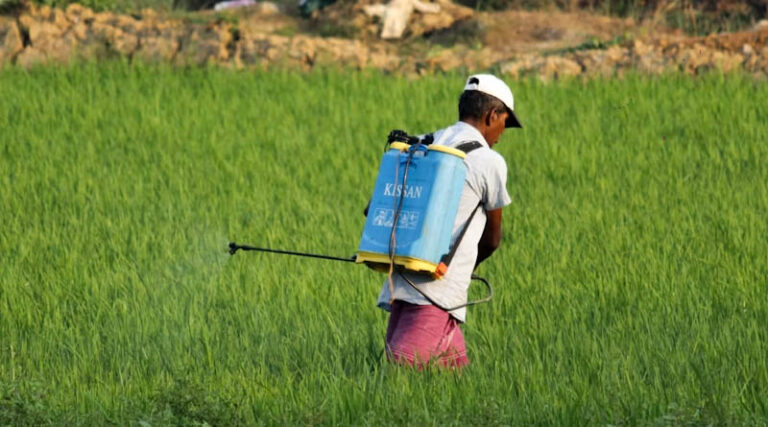
06 October 2026, Edinburgh: A recent article published on Global Agriculture titled, ‘Carbosulfan Deserves a Verdict Based on Indian Evidence, Not Borrowed Alarm’ by Kapoor R, presents an extensive account of carbosulfan toxicology, its international regulatory history, and the proposed prohibition of carbosulfan in India. The article brings together several regulatory and toxicological concerns that we would like to address systematically.
Its key argument is that India’s proposed carbosulfan ban rests on “borrowed alarm” rather than domestic evidence. The author contends that the Ministry of Agriculture owes farmers a decision based on data generated in India, rather than on incidents reported elsewhere.
However, the argument that India should wait for extensive local evidence before taking regulatory action on hazardous pesticides runs counter to the very objective of India’s pesticide legislation: “to prevent risks to human beings and animals”. This does not mean waiting for evidence of harm before action is taken.
Such an approach is impossible to sustain in a globalised, interconnected world, where agricultural commodities, chemicals, and information move across national borders. Neither hazardous chemicals nor the risks associated with them respect borders. This is precisely the logic underlying the Rotterdam Convention’s Prior Informed Consent (PIC) procedure: information about chemicals that have been subject to regulatory action because of serious health or environmental concerns is shared so that other countries can make better-informed decisions about their use and trade.
India’s proposed ban on carbosulfan comes in the context of its listing under the Convention’s Annex III in May 2025. The Annex lists pesticides and industrial chemicals that have been severely restricted or banned for health and environmental reasons in at least two countries due to their inherent toxicity.
The listing does not mean that India or any other country must ban carbosulfan. It does, however, mean that carbosulfan has been identified globally as a highly hazardous pesticide and that this evidence cannot reasonably be dismissed as merely “borrowed alarm”.
The author cites the FAO Guidelines for Legislation on the Control of Pesticides from 1985/1989 to support the idea that India should rely on domestic evidence when taking regulatory action. These guidelines have long since been superseded by Guidelines for the Registration of Pesticides (FAO, 2010), Guidelines on Pesticide Legislation (FAO, 2016), and the Pesticide Registration Toolkit (continuously updated), all of which specifically encourage the exchange and sharing of information relating to pesticide regulation, registration, use and impacts among countries. This recognises the value of knowledge sharing, as well as the limitations of national regulatory authorities in independently accessing and assessing all relevant evidence.
The European Union’s 27 member states, through its “One Substance, One Assessment” approach, seek to ensure that scientific information on chemicals is assessed coherently and used across different regulatory processes. The underlying principle is that evidence of a substance’s hazards should not be discounted simply because it was generated for a different regulatory purpose or in another jurisdiction. For countries with limited regulatory and surveillance capacity, making effective use of existing evidence is even more important.
Domestic evidence is valuable. However, the absence of domestic evidence is not the same as proof of safety. India lacks a systematic national surveillance system for pesticide poisoning. Such data are not systematically collected by the pesticide industry or state authorities.
Therefore, the information the author requires may not be available in the foreseeable future. Countries with limited poisoning surveillance cannot wait for their own farmers and communities to generate data on pesticide harms before acting on credible evidence of harm from elsewhere.
The article also overlooks India’s pesticide regulation history. Contrary to the suggestion that there has been no Indian alarm over carbosulfan, Punjab took regulatory action against its sale in 2018.
The broader regulatory context also matters. India’s pesticide regulatory system has faced repeated questions about its capacity, transparency and consistency. It operates with limited technical and institutional capacity, despite its decisions having significant impacts. These realities make transparency, independent assessment and post-market surveillance particularly important when reviewing highly hazardous pesticides.
The article’s selective focus on the lack of transparency surrounding the recommendation to ban carbosulfan risks overlooking the wider complexities of pesticide regulation in India. Concerns about the transparency and consistency of India’s pesticide-review process are neither new nor confined to carbosulfan. The Supreme Court itself, in 2023, questioned why multiple committees had been constituted to consider pesticide bans and observed: “It seems that every time you have an adverse report from one committee, you form a new committee. You keep appointing committees till you get a favourable decision”.
The article describes carbosulfan as having been engineered to combine “carbofuran’s efficacy with a gentler acute toxicity profile in the applied product”. The description appears inconsistent with human data showing high toxicity. A Sri Lankan clinical study, which also played a key role in the Rotterdam Convention listing, found substantially higher mortality among patients who had ingested carbosulfan than among those who had ingested carbofuran: 11.1% versus 2.2%, respectively, with the difference attributed to differences in formulation. Carbosulfan is highly toxic and associated with a high need for intensive care, with implications for healthcare resource use.
The author argues that the absence of a specific antidote should not be overinterpreted because atropine is an effective treatment for carbamate poisoning. However, the availability of atropine does not eliminate the risk of severe or fatal poisoning – in the Sri Lankan cohort, 11.1% of patients still died despite receiving atropine.
In 2020, Jepson and colleagues assessed the hazard and risk of 659 pesticides in current global use. Their assessment incorporated acute and chronic human-health hazards as well as risks to aquatic organisms, terrestrial wildlife and pollinators – all major issues as climate change and biodiversity increasingly affect South Asia. Carbosulfan was identified as requiring extensive risk-mitigation measures, reflecting concerns across multiple human-health and environmental endpoints. This framework provides additional independent evidence supporting a precautionary approach to carbosulfan use.
Overall, the article sets up a false choice between “Indian evidence” and “international evidence”. Sound pesticide regulation requires both. Domestic surveillance can reveal how a pesticide behaves under local conditions, while international evidence can identify risks that a country’s own surveillance system may not yet detect.
The stakes are high for countries like India, where agriculture accounts for a large share of the workforce, and continued exposure to hazardous pesticides affects not only health but also household livelihoods and agricultural productivity. Regulatory decisions should consider the full range of available evidence, including toxicological studies, clinical poisoning data, environmental evidence, regulatory experience in other countries, and, as it emerges, India’s own evidence base.
The question is not whether India should blindly follow regulatory decisions made elsewhere. It should not. Nor should India ignore its own regulatory and agricultural context. The question is whether evidence generated elsewhere should be considered alongside Indian evidence when assessing a pesticide’s risks. Pesticide poisoning remains a major public health problem, accounting for over 20% of suicides in India. This is why both the WHO and India’s National Suicide Prevention Strategy identify the phasing out of highly hazardous pesticides as a highly cost-effective and immediate priority.
India’s proposed action on carbosulfan should be viewed not as a decision based on “borrowed alarm”, but as an opportunity to apply the precautionary principle while strengthening domestic evidence and surveillance. The absence of good-quality local data is not a licence to postpone action where credible evidence of serious harm already exists. The regulatory question is not whether the evidence is Indian or foreign, but whether the totality of the evidence provides sufficient grounds to act to protect people and the environment from avoidable harm.
Global Agriculture is an independent international media platform covering agri-business, policy, technology, and sustainability. For editorial collaborations, thought leadership, and strategic communications, write to pr@global-agriculture.com