The Technologies Reshaping the Global Agricultural Formulations Industry
From advanced conventional formulations to biologicals, controlled release, nanotechnology and RNA delivery, formulation science is becoming a core technology in global crop protection
01 September 2026, London: The global agricultural formulations industry is entering a new phase in which the value of a crop-protection product increasingly depends not only on its active ingredient, but on how effectively that ingredient is stabilised, delivered, deposited, absorbed and retained.
The scale of the market makes this shift significant. According to the latest Food and Agriculture Organization data, global pesticide use reached 3.92 million tonnes of active ingredients in 2024, up 5% from 2023. Pesticide use per hectare reached 2.49 kg. In 2024, the Americas alone imported 2.31 million tonnes of formulated pesticide products, worth about US$14 billion.
Yet formulation technology is changing as regulation, resistance, environmental concerns, water constraints and precision application reshape the requirements for crop-protection products.
From formulations to delivery systems
Conventional formulations such as emulsifiable concentrates, suspension concentrates, soluble concentrates and water-dispersible granules remain the industry’s foundation. However, formulators are improving their stability, sprayability, rainfastness, leaf retention, penetration and compatibility with modern application systems.
Adjuvants are also becoming increasingly important. Surfactants, oils, spreaders and stickers influence droplet formation, spreading, retention and penetration. USDA Agricultural Research Service research has demonstrated that formulation properties and adjuvants can significantly influence spray-droplet behaviour.
This is pushing formulation development toward application-specific design, where chemistry is considered alongside nozzles, droplet size, spray pressure, environmental conditions and application equipment.
Controlled release and nanotechnology
Controlled-release formulations use capsules, polymers or matrices to regulate the release of an active ingredient. The objective is to extend biological activity while reducing losses through runoff, leaching, volatilisation or degradation.
Research is now exploring biodegradable polymers, microcapsules, nanocarriers and stimuli-responsive materials. The challenge is ensuring that release rates match crop growth, pest biology and environmental conditions.
Nanotechnology is similarly being developed as a delivery platform. Nanoformulations can potentially improve solubility, protect sensitive compounds, enable controlled release and increase delivery to biological targets. However, commercial adoption remains limited. A 2026 review in Nature Reviews Earth & Environment estimated that nano-agrochemicals account for less than 1% of the global agrochemical market.
Biologicals require a different formulation approach
Biological crop-protection products are creating new formulation challenges because microorganisms and biological molecules can be sensitive to temperature, moisture, pH, oxygen, ultraviolet radiation and processing conditions.
Recent scientific reviews identify environmental instability, short shelf life and inconsistent field performance among the major challenges for biopesticides. Formulation research is therefore focusing on stabilisation, encapsulation, protective carriers and controlled-release systems.
The development of biologicals is also connecting formulation science with fermentation and the circular bioeconomy. Agricultural by-products are being investigated as potential fermentation feedstocks and formulation carriers, although contamination control, fermentation economics, strain stability and storage remain important barriers.
RNA delivery opens another frontier
RNA interference is creating an entirely new formulation problem. RNA-based pesticides use double-stranded RNA to silence specific genes in target organisms, offering highly sequence-specific crop protection.
The technology’s potential depends heavily on delivery. RNA can degrade under environmental conditions and may not be efficiently taken up by target organisms. Researchers are therefore investigating nanoparticle carriers, topical delivery and other stabilisation technologies.
For formulation companies, the challenge is no longer simply developing an active ingredient, but building a delivery system that can protect RNA, maintain its activity and deliver it to the biological target at commercially viable cost.
Seed treatment and precision spraying
Seed treatment formulations are also becoming more sophisticated as chemical pesticides are combined with microbial inoculants, biostimulants and other biological products. Compatibility, uniform application and storage stability become critical when multiple components are involved.
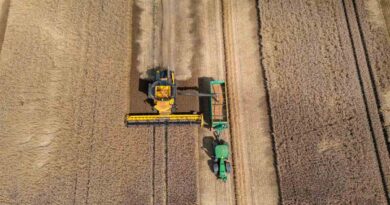
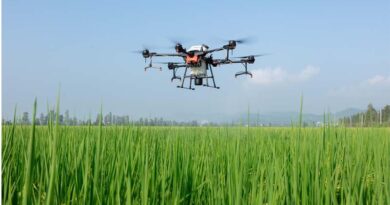
At the same time, precision agriculture is changing how formulations are applied. Machine vision, variable-rate application, intelligent spraying, drones and autonomous equipment can adjust application according to crop conditions.
USDA Agricultural Research Service is developing intelligent spray systems capable of controlling individual nozzle outputs in real time, with the aim of improving deposition while reducing water and chemical waste.
This means formulation development and application engineering are increasingly becoming part of the same technology system.
Five technology platforms are emerging
The industry’s development can broadly be understood through five overlapping formulation technology platforms:
| Technology platform | Core objective | Key technologies | Main challenge |
|---|---|---|---|
| Advanced conventional formulations | Improve existing active ingredients | SC, EC, SL, WG, OD, SE, improved surfactants | Cost and regulatory pressure |
| Precision delivery | Put more product where it is needed | Adjuvants, droplet engineering, seed treatment, precision spraying | Application variability |
| Controlled-release systems | Extend and regulate activity | Microcapsules, polymers, matrix systems | Release control and cost |
| Biological formulations | Stabilise living or biological actives | Fermentation, encapsulation, protective carriers | Shelf life and field consistency |
| Molecular/nano delivery | Deliver highly specific active agents | Nanocarriers, RNA, advanced polymers | Stability, regulation and commercial scale |
These platforms increasingly overlap. An RNA pesticide may use a nanoparticle carrier, a microbial product may use encapsulation, while a conventional herbicide may combine controlled release with precision spraying.
The economics are shifting toward delivery efficiency
FAO reported 6.7 million tonnes of formulated pesticide products traded internationally in 2023, worth US$42.8 billion. These figures highlight the difference between active ingredients and finished formulations.
The industry does not sell active ingredients directly to biological targets. Products must survive manufacturing, transport, storage, dilution and application before reaching their intended target.
That makes delivery efficiency an increasingly important source of value. A formulation that improves deposition, persistence or target uptake can potentially improve performance without requiring a new active ingredient.
The next generation of formulation companies
The competitive advantage is likely to come from combining disciplines rather than specialising in one technology. Chemistry, materials science, biology, data science and application engineering are increasingly interconnected.
The direction of travel is clear. The future formulation will not simply be a container for an active ingredient. It will be an engineered delivery system.
As crop-protection companies face tighter environmental standards, resistance challenges, operator-safety requirements and increasingly precise application technologies, formulation science is moving closer to the centre of product strategy.
The active ingredient may determine what a product can do. Increasingly, the formulation will determine how well, how precisely and under what conditions it can do it.
Also Read: Glyphosate Use in Caldor Fire Restoration Draws Strong Opposition at Lake Tahoe Meeting
Global Agriculture is an independent international media platform covering agri-business, policy, technology, and sustainability. For editorial collaborations, thought leadership, and strategic communications, write to pr@global-agriculture.com