Why Agri-Input Dealers Matter More Than Ever in an Era of Agricultural Uncertainty
Opinion piece by Dr Himanshu Pathak, Director General of the International Crops Research Institute for the Semi-Arid Tropics
26 May 2026, New Delhi: The role of agriculture input dealers is rapidly changing. For decades, they have primarily been viewed as suppliers of seeds, fertilizers, pesticides, and farm machinery. But as climate pressures intensify, fertilizer prices rise, and global supply chains become increasingly unstable, agriculture itself is undergoing a profound transformation.
Today, farmers require trusted guidance, scientific advice, practical solutions, and access to technologies that help them navigate an increasingly uncertain future, placing agri-input dealers in an increasingly important role as frontline advisors supporting more resilient, climate-smart farming systems.
This shift was at the center of a recent training program organized by ICRISAT HQ in Telangana, India, under the theme ‘From Input Suppliers to Climate-Smart Farm Advisors,’ where knowledge sharing focused on soil health management, sustainable farming systems, and the growing importance of resilient agriculture.
The timing of these trainings could not be more relevant.
Across many parts of the world, geopolitical instability is now directly affecting agriculture. Global fertilizer markets have become increasingly volatile, driven by conflicts and supply chain disruptions, which are contributing to rising production costs and growing uncertainty for farming communities.
Countries heavily dependent on imported agricultural inputs are particularly vulnerable.
For smallholder farmers already facing erratic rainfall, declining soil fertility, water scarcity, and climate shocks, these pressures can quickly become existential.
This is why resilient crops, healthier soils, and more efficient nutrient management are becoming central to the future of agriculture.
At the International Crops Research Institute for the Semi-Arid Tropics (ICRISAT), these realities are shaping ongoing efforts to strengthen dryland farming systems across Asia, Africa, and beyond.
Increasingly, the focus is on helping farmers strengthen their productivity, resilience, and incomes under increasingly challenging growing conditions.
One of the clearest examples is the growing importance of legumes such as chickpea, pigeonpea, and groundnut.
Unlike many cereal crops, legumes require comparatively lower nitrogen fertilizer inputs because they naturally improve soil fertility through nitrogen fixation.
This makes them particularly important at a time when fertilizer affordability and availability are becoming major concerns globally.
Resilient crops such as chickpea are also helping diversify farming systems that have become overly dependent on monocropping, one of the greatest long-term threats to soil health and agricultural sustainability.
In several regions, intensive cultivation of single crops has contributed to declining soil fertility, nutrient imbalances, increased pest pressure, and growing environmental stress.
Crop diversification offers a practical pathway forward.
Legumes not only improve soil fertility and water retention but also provide farmers with additional income opportunities, improved nutrition, and greater resilience to climate stress.
In Southern Africa, for example, chickpea is increasingly emerging as a strategic crop due to its adaptability to dryland conditions, nutritional value, and growing domestic and export demand, as this recent ICRISAT story highlights.
This growing importance is reflected in ICRISAT’s ongoing efforts to expand climate-resilient chickpea production and strengthen seed systems across the region in partnership with governments, researchers, and the private sector.
Through its research and partnerships, ICRISAT is helping accelerate the development and scaling of improved crop varieties that are drought-tolerant, disease-resistant, and better suited to the realities facing dryland farmers today.
However, ensuring these innovations reach farming communities at scale also depends on strengthening the knowledge and advisory capacity of those working most closely with farmers.
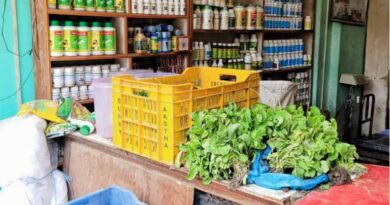
One of the strongest messages emerging from the Telangana training program was the critical role of agriculture input dealers as frontline advisors within farming communities.
In many rural areas, farmers interact with local agri-input suppliers long before they consult scientists or extension officers.
Recommendations on fertilizer use, seed selection, micronutrients, crop diversification, and pest management can directly influence productivity, profitability, and long-term sustainability.
This creates both responsibility and opportunity.
As agriculture becomes more knowledge-intensive and climate-sensitive, input dealers are increasingly becoming key intermediaries between science and the farmer.
Their ability to promote soil testing, balanced nutrient use, climate-smart farming practices, biological solutions, and sustainable crop choices will play an important role in shaping the resilience of future food systems.
Through initiatives such as the Telangana training program, ICRISAT is supporting this transition by equipping agri-input dealers with the scientific knowledge and practical tools needed to become more effective climate-smart advisors to farming communities.
This growing emphasis on local advisory capacity reflects the increasingly important role trusted frontline agri-input dealers will play in helping farming systems adapt to climate uncertainty, geopolitical instability, and rising input costs.
As global pressures on food systems continue to intensify, investing in resilient agriculture and the people who support farmers every day may prove to be one of the most important investments we make for the future of food security and rural livelihoods.
Also Read: China’s Fertilizer Trade Sees Strong Export Growth in Jan–April 2026, Potash Imports Remain Critical
Global Agriculture is an independent international media platform covering agri-business, policy, technology, and sustainability. For editorial collaborations, thought leadership, and strategic communications, write to pr@global-agriculture.com