High Yielding Paddy Variety: Pusa 1592
30 May 2026, New Delhi: Pusa 1592 is a high yielding paddy variety released in 2014 by CVRC and recommended for the Basmati growing areas of Punjab, Haryana, Delhi, Western UP, Uttarakhand, and Jammu & Kashmir. Developed at ICAR-IARI, New Delhi, through Marker-Assisted Selection (MAS), it is a bacterial blight resistant line derived from elite variety Pusa Sugandh 5. The yield and quality of Pusa 1592 are maintained on par with its recurrent parent Pusa Sugandh 5, effectively making it a superior, disease-protected version of an already successful variety.
Molecular Breeding for Disease Resistance
By introgressing bacterial blight resistance genes into the Pusa Sugandh 5 background, scientists at IARI created a variety that can withstand bacterial blight without requiring heavy antibiotic sprays. This reduces the cost of crop protection and ensures cleaner, more residue-free grain for export markets.
Grain Quality and Cropping System Suitability
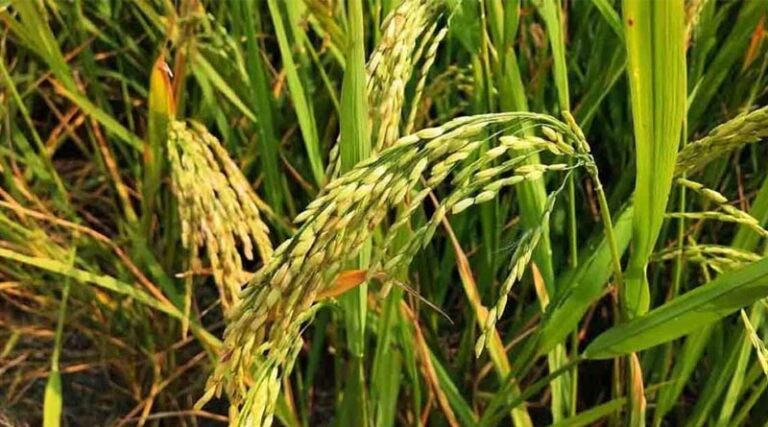
Pusa 1592 produces extra-long slender translucent grains with a strong Basmati aroma, highly valued in premium domestic and export rice markets. Like its parent Pusa Sugandh 5, it is suitable for multiple cropping systems of northern India, particularly the rice-wheat double crop system, due to its short to medium maturity duration.
Quick Reference Table
| Parameter | Details |
| Variety Name | Pusa 1592 |
| Type | MAS-derived Bacterial Blight Resistant NIL of Pusa Sugandh 5 |
| Developed By | ICAR-IARI, New Delhi |
| Year of Release | 2014 (CVRC) |
| Grain Type | Extra-Long Slender, Translucent |
| Bacterial Blight Resistance | Yes (gene pyramiding) |
| Aroma | Strong Basmati |
| Yield & Quality | On par with Pusa Sugandh 5 |
| Cropping System | Suitable for Multiple Cropping |
| Recommended States | Punjab, Haryana, Delhi, Western UP, Uttarakhand, J&K |
Global Agriculture is an independent international media platform covering agri-business, policy, technology, and sustainability. For editorial collaborations, thought leadership, and strategic communications, write