27 August 2026, London: Carbosulfan, a broad-spectrum carbamate insecticide sold under trade names such as Marshal, Posse, and Advantage, has gone from being a mainstay of rice, cotton and vegetable pest management to one of the most closely watched insecticides in international chemical regulation. Over the past two decades it has been withdrawn, restricted or banned in a growing number of jurisdictions, and in 2025 it was formally listed for the first time under a United Nations chemicals treaty. Now, India, one of the world’s largest remaining users of the molecule, has moved a draft order to ban it outright. This article lays out the science behind the concern, traces the regulatory history country by country, and unpacks what India’s proposed ban could mean for the roughly Rs 400-crore domestic market and the farmers who rely on it.
A Brief History of the Molecule
Carbosulfan’s story begins with carbofuran, a broad-spectrum carbamate insecticide and nematicide patented by the FMC Corporation (then still branching out from its roots as a California orchard-equipment maker into agricultural chemistry) under US patents issued in October 1969, and commercialised under the trade name Furadan. Carbofuran was an immediate commercial success, and FMC introduced it to European and Asian markets under the name Marshal starting in 1980; once the original patent expired around 1986, other manufacturers began producing it under a wide range of trade names.
Carbofuran’s success came with a serious downside: even at very low doses, it proved acutely toxic to birds and other wildlife, with a single granule capable of killing a small bird. Chemists at FMC and elsewhere responded in the 1970s by developing a family of “pro-insecticides” or “pro-carbamates,” derivatives of carbofuran and similar compounds engineered to be far less toxic in their applied form, while still converting into the active parent compound once inside a target insect’s body. Carbosulfan, a sulfenylated (sulphur-linked) derivative of carbofuran, was one of these second-generation molecules, alongside close relatives such as benfuracarb and furathiocarb. US patent filings from FMC in the 1970s on “N-aminosulfenylated derivatives of carbofuran” describe this design goal directly: compounds that retained carbofuran’s insecticidal potency against pests while showing substantially reduced mammalian toxicity in laboratory testing.
The chemistry behind this approach, sometimes described in toxicology literature as the “pro-carbamate” strategy, works by delaying the release of the toxic parent compound until after the pesticide has been absorbed by the target insect or has broken down in the field. The intent was to reduce acute hazards to birds, mammals, and applicators compared with carbofuran’s direct-acting granules. Carbosulfan was commercialised and marketed globally from the early-to-mid 1980s onward under trade names including Marshal, Posse, Advantage and Sheriff, and became a well-established tool for controlling sucking pests, stem borers, and soil insects across rice, cotton, vegetables, sugarcane and fruit crops, particularly in Asia, Africa and Latin America.
The same mechanism that made carbosulfan seem safer at launch is what eventually caught up with it. Because it is designed to convert into carbofuran after absorption, a large or concentrated exposure, such as in a poisoning event, still delivers a substantial dose of one of the world’s most hazardous carbamates, just with a short time delay. It was this rapid in-body conversion, established through toxicological and clinical research over the following decades, that placed carbosulfan on the same regulatory trajectory as carbofuran itself, culminating in the restrictions and bans detailed below.
What Is Carbosulfan and Why Does It Worry Regulators?
Carbosulfan is an N-methyl carbamate insecticide, chemically related to and metabolically derived from carbofuran, one of the most notorious “highly hazardous pesticides” (HHPs) in agrochemical history. It works by inhibiting the enzyme acetylcholinesterase, disrupting nerve signal transmission in insects, and, on exposure, in humans and other vertebrates too.
The core toxicological concern is that once ingested or absorbed, carbosulfan is rapidly metabolised inside the body into carbofuran, a substance the World Health Organization classifies as Class Ib, “highly hazardous.” A pharmacokinetic review prepared for WHO’s pesticide residue programme found that the oral LD50 values for technical-grade carbosulfan in rats ranged from about 90 to 250 mg per kg of body weight, based on acute toxicity studies evaluated by the Joint Meeting on Pesticide Residues (JMPR) in 1984. Carbosulfan itself is generally classified by WHO as Class II (“moderately hazardous”), a notch below carbofuran, but because it converts into the more dangerous compound in the body, the practical risk of poisoning is much closer to that of a Class I product.
That risk is not theoretical. A clinical study of self-poisoning cases across six Sri Lankan hospitals, tracking 1,288 patients who had ingested carbamate insecticides, found that carbosulfan poisoning carried a significantly higher risk of death than carbofuran poisoning: 11.1% case fatality for carbosulfan against 2.2% for carbofuran, despite carbosulfan formally sitting in a less hazardous WHO toxicity class. Researchers linked this to the compound’s rapid conversion to carbofuran once inside the body, producing severe cholinesterase inhibition with no specific antidote available; only supportive treatment such as atropine can manage symptoms.
Beyond human toxicity, carbosulfan is also flagged for its ecological footprint. Technical data sheets and pesticide-property databases describe it as highly toxic to birds, fish, aquatic invertebrates, bees and earthworms, with very low LD50/LC50 thresholds across each of these groups, and it is registered as a marine pollutant under GHS hazard classification.
The Global Regulatory Trajectory
Early movers: United Kingdom and the European Union
Europe was among the first major markets to act. The UK withdrew authorisation for carbosulfan-containing products in 2001. The wider EU followed with a 2007 Commission Decision that excluded carbosulfan from Annex I of the old Plant Protection Products Directive (91/414/EEC), triggering the withdrawal of all national authorisations for products containing the substance across the bloc. In practical terms, this meant carbosulfan could no longer be legally sold or used in EU member states from that point on, and the EU has since maintained very low maximum residue limits (as low as 0.05 mg/kg on produce such as apples and oranges) to catch any residual trade exposure.
Sri Lanka: an early and consequential regulatory leader
Sri Lanka has done more than any other single country to build the global evidence base against carbosulfan, largely because of its historically high rate of pesticide self-poisoning deaths. Since enacting its Control of Pesticides Act in 1980, Sri Lanka has banned or restricted 55 pesticides, and pesticide-restriction measures across this period are credited with a roughly 70% reduction in the country’s suicide rate, an estimated 93,000 lives saved between 1995 and 2015, without any recorded impact on agricultural productivity. This earned the country the 2021 Future Policy Award. It was Sri Lanka that led the technical briefing that ultimately persuaded the Rotterdam Convention’s Conference of the Parties to list carbosulfan (see below), and the country has set a target of eliminating serious pesticide-related harm entirely by 2035.
Southeast and East Asia
Vietnam banned carbosulfan (along with the related carbamate benfuracarb) in the second quarter of 2022, as part of a broader wave of Highly Hazardous Pesticide phase-outs across the region that has also swept up mancozeb, chlorothalonil, carbaryl and several antibiotics used in agriculture. Thailand has separately banned or restricted a large list of pesticides, over 100 active ingredients, as part of its own HHP reduction programme, though its specific position on carbosulfan sits within this broader restricted list rather than as a standalone headline ban. China has been progressively tightening its pesticide list too, having banned or restricted close to 50 active ingredients by the end of March 2022, with further phase-outs of organophosphate-family chemicals scheduled through 2024, reflecting a regional trend toward eliminating older, high-acute-toxicity carbamates and organophosphates in favour of newer, more target-specific chemistries.
Latin America
Carbosulfan has been on prohibited-pesticide lists maintained by sustainability-certification bodies operating across Latin America. The Sustainable Agriculture Network, whose standard underpins Rainforest Alliance certification, has listed carbosulfan as prohibited on certified farms since July 2011. This means coffee, banana, cocoa and other certified export crops grown in Latin America have effectively been carbosulfan-free for well over a decade, regardless of each country’s individual national registration status.
Africa
A cluster of West and Central African nations, including Burkina Faso, Cabo Verde, Chad, the Gambia, Mauritania, Niger and Senegal, jointly notified the Rotterdam Convention secretariat of final regulatory action against carbosulfan, which fed directly into the case for its international listing. South Africa, separately, committed to phasing out a list of hazardous pesticides with a completion deadline of June 2024 as part of its own HHP reduction roadmap.
The Rotterdam Convention: a 2025 turning point
The most significant recent development is international rather than national. At the twelfth Conference of the Parties to the Rotterdam Convention (RC COP-12), held in Geneva from 28 April to 9 May 2025 alongside the Basel and Stockholm Convention meetings, parties agreed to list carbosulfan, together with a severely hazardous formulation of fenthion, in Annex III of the Convention. This was not a foregone conclusion: carbosulfan’s listing had been blocked by lack of consensus at previous COPs in 2022 and 2023, alongside other contested chemicals such as acetochlor, paraquat dichloride formulations and chrysotile asbestos. Delegates and observers at the 2025 meeting noted some surprise that consensus was finally reached, with commentary suggesting that capacity-building support and a lack of continuing commercial production interest may have eased the objections that had previously stalled the listing.
Annex III listing does not itself ban carbosulfan. The Rotterdam Convention is a Prior Informed Consent (PIC) instrument, not a prohibition treaty. What it does is legally oblige exporting countries to seek and respect the explicit consent of an importing country before shipping the chemical, and it formally brands carbosulfan a “Highly Hazardous Pesticide” in the eyes of the international regulatory community. The amendment listing carbosulfan entered into force on 22 October 2025, and Rotterdam Convention parties have been asked to submit their formal import responses (accept, refuse, or accept with conditions) by 21 July 2026, a deadline India’s own domestic ban process will likely intersect with. The Centre for Pesticide Suicide Prevention, an Edinburgh-based research body that supported Sri Lanka’s push for the listing, has publicly welcomed the decision as a significant step in reducing pesticide self-poisoning deaths worldwide.
India’s Proposed Ban: What Is Happening and Why Now
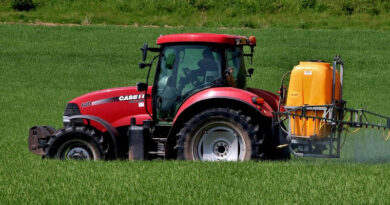
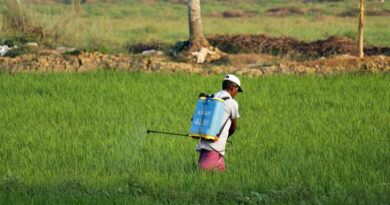
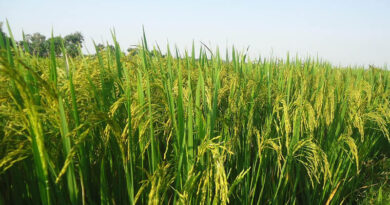
India remains one of the largest markets globally for carbosulfan, which is currently registered for a wide range of uses. According to India’s Central Insecticides Board and Registration Committee, current registrations cover use in rice against gall midge, stem borer, leaf folder, white-backed plant hopper, brown plant hopper and green leaf hopper; in cotton against aphids and thrips (including as a seed treatment); and in chilli, cumin and brinjal against sucking pests and shoot-and-fruit borer. In recent years it has become an increasingly important tool for controlling gall midge outbreaks in rice-growing regions of southern and eastern India, where alternative chemistries are limited.
That reliance is now colliding with a formal move toward prohibition. On 14 January 2026, India’s Ministry of Agriculture and Farmers Welfare constituted a high-level expert committee to examine the continued registration and use of carbosulfan in the country. The committee submitted its findings to the central government on 12 June 2026. Following this, the government consulted the statutory Registration Committee under the Insecticides Act, 1968, which, after reviewing the available toxicological data and safety studies, recommended a complete and immediate prohibition on the manufacture, import, transport, distribution, sale and use of carbosulfan.
The Registration Committee’s reasoning, as reflected in the government’s draft order, closely mirrors the global scientific consensus: carbosulfan is described as an intrinsically highly hazardous carbamate insecticide that is rapidly metabolised to carbofuran, a highly toxic metabolite responsible for severe cholinesterase inhibition and acute systemic toxicity. The committee also cited significant toxicity to birds, pollinators and aquatic organisms, the absence of any specific antidote (atropine and supportive care being the only available treatment), and the fact that several other countries have already restricted or prohibited the chemical.
Under the draft order published in the Official Gazette, the government has:
Proposed a prohibition on the import, manufacture, sale, transport, distribution and use of carbosulfan from the date of publication of the final order.
Directed the Registration Committee to recall all existing certificates of registration for carbosulfan-based products.
Given certificate holders a three-month window to surrender their registrations, with non-compliance to be treated as an offence under the Insecticides Act.
Called on state governments to take the necessary implementation steps once the order is finalised.
Union Agriculture Minister Shivraj Singh Chouhan has publicly described the move as necessary given the chemical’s risk profile.
Industry Pushback
The proposed ban has drawn strong objections from India’s agrochemical sector. Industry estimates cited by the Agro Chem Federation of India (ACFI) suggest carbosulfan currently supports pest management across roughly 32 lakh (3.2 million) acres of Indian farmland, with a domestic market valued at approximately Rs 400 crore. Industry representatives have also pointed out that an estimated 30 to 50 companies are directly or indirectly involved in carbosulfan’s manufacturing, formulation, repacking, distribution and marketing, a value chain that also touches a large number of MSMEs, distributors and retailers within India’s roughly 65,000-entity pesticide value chain.
Industry bodies argue that carbosulfan remains an important and comparatively low-cost tool for controlling stem borers, sucking pests, leaf feeders and soil pests, and plays a role in insect resistance-management programmes given the limited number of pesticide molecules currently registered for use in India compared with several developed markets. Their broader concern is that further narrowing of the available chemistry could expose Indian agriculture to greater pest pressure, resistance build-up and yield risk, and industry groups have called for a “balanced, science-based” approach centred on safe and responsible use rather than an outright ban.
What Comes Next
Two regulatory timelines are now running in parallel and will shape the global conversation on carbosulfan over the coming year:
India’s domestic process: the draft order is open to the standard consultation period before it can be notified as final. Given the scale of the acreage involved (rice, cotton, chilli, brinjal and cumin cultivation across multiple states) and the size of the industry pushback, a transition period, phased withdrawal, or exemptions for existing stock are plausible outcomes, based on how India has handled comparable insecticide bans in the past (such as endosulfan, where the Supreme Court’s ban was followed by a prolonged and contested implementation process).
The Rotterdam Convention import-response deadline: parties to the Convention, India included, are due to submit formal import responses on carbosulfan by 21 July 2026. India’s domestic ban decision and its Rotterdam Convention response are likely to be closely linked, since a country that prohibits a chemical domestically would typically also refuse its import under the PIC procedure.
For global-agriculture stakeholders, the carbosulfan story is a case study in how a chemical can remain a genuinely useful, comparatively affordable pest-control tool in one regulatory environment while simultaneously accumulating enough toxicological and ecological evidence elsewhere to be treated as a Highly Hazardous Pesticide requiring international prior-consent controls. Sri Lanka’s public-health-driven restrictions, the EU’s 2007 exclusion, Vietnam’s 2022 ban, the 2025 Rotterdam Convention listing, and now India’s proposed prohibition have all converged within a few years of each other. The debate over transition timelines, alternatives and economic impact continues to play out most visibly in India.
Global Agriculture is an independent international media platform covering agri-business, policy, technology, and sustainability. For editorial collaborations, thought leadership, and strategic communications, write to pr@global-agriculture.com