06 November 2026, Chicago, US: Chicago Board of Trade soybean futures dropped to their lowest level in 11 weeks this week, as a slowdown in Chinese purchases outweighed confirmation of a near-record pace to the US harvest. The most actively traded soybean contract fell 0.66 percent to $12.06 a bushel, while corn held steady at $4.42 and a half a bushel.
The price slide came even as the US Department of Agriculture confirmed private sales of 136,000 metric tons of US soybeans to China for delivery in the 2026/27 marketing year, announced earlier in the week. China has continued to buy American soybeans in the months since trade talks between Washington and Beijing produced a pledge from China to purchase larger volumes of US farm goods, but the pace of that buying has eased.
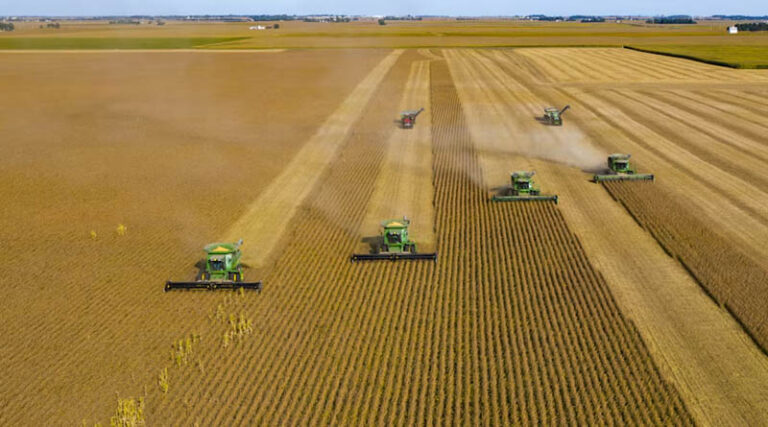
Soybean harvest progress out of the Midwest painted a different picture of ample supply. The USDA reported the US soybean harvest was 88 percent complete, ahead of the five year average of 84 percent for this point in the season, while corn harvest reached 74 percent completion. The agency has forecast a record large soybean crop for the current season, adding to the supply overhang weighing on prices even as export demand from China ticks along.
Brazil’s currency and freight costs cut into US competitiveness
Analysts pointed to currency and freight dynamics as a second drag on US soybean values. Johnny Xiang, founder of the consultancy AgRadar, said the recent depreciation of Brazil’s real against the dollar, combined with elevated US freight rates, has strengthened the competitiveness of Brazilian soybeans relative to US supply just as South American farmers prepare for their own planting season. Xiang also pointed to the slowdown in Chinese buying as a direct weight on US soybean prices, even with the harvest data showing a smooth finish to the US season.
The pattern adds a wrinkle to the broader US-China agricultural trade relationship, which has been closely watched since the two countries’ leaders met and China pledged to resume and expand purchases of US farm goods as part of a wider trade truce. Soybeans have been the most visible beneficiary of that pledge, with Chinese state-linked buyers making repeated purchases through the autumn.
A review of Chinese customs data, however, found that Chinese purchases of US farm goods other than soybeans are on track for their lowest level in seven years this year, despite the broader commitment to buy billions of dollars of American agricultural imports. The divergence suggests Chinese demand has concentrated heavily on soybeans, where China’s own crushing industry remains reliant on imported supply, while other categories of US farm exports, including items such as sorghum, pork and dairy products, have not seen a comparable rebound.
The soybean price weakness also comes at a sensitive point in the US harvest calendar, with most of the crop now in the bin and farmers and grain handlers assessing storage and marketing decisions for the season ahead. A record-large crop combined with softer export pull from China points to ample US carryout stocks heading into the Northern Hemisphere winter, a dynamic that has already been reflected in the slide in futures prices this week.
Corn markets showed less movement than soybeans, with prices steady even as harvest activity continued to wind down across the Corn Belt. The relative calm in corn contrasted with the soybean complex, where traders have been more sensitive to signals about Chinese demand given how central soybean exports have become to the narrative around the US-China trade relationship this year.
Global Agriculture is an independent international media platform covering agri-business, policy, technology, and sustainability. For editorial collaborations, thought leadership, and strategic communications, write to pr@global-agriculture.com