24 September 2026, London: Global sulphur prices slipped over the past week as phosphate fertilizer producers pushed back against record raw material costs, but the market remains in a severe supply squeeze with little sign of relief. In China, ex-works sulphur in Shandong averaged 7,453.5 yuan per tonne (about $1,110 at 6.72 yuan to the dollar) in the week to September 18, down 575 yuan (about $86) or 7.2% from the previous Friday, according to price reporting agency Shanghai Metals Market (SMM). Internationally, the Middle East FOB average held flat at $855 per tonne, Indonesia’s CIF average fell $20 to about $1,005, and the South Asia CFR average was trimmed from $1,075 to $1,050 per tonne.
The pullback reflects weak buying rather than new supply. Downstream buyers cannot absorb current prices: MAP and DAP margins are deeply negative, autumn fertilizer procurement is running late, and resistance to high-priced raw materials persists. The China benchmark was about 7,752 yuan per tonne (about $1,154) on September 22, down nearly 16% over the month but still roughly triple its level a year ago. That is well below the all-time high of about 11,084 yuan (about $1,650) reached in June, but still far from normal.
The core problem remains the Strait of Hormuz. According to the International Food Policy Research Institute (IFPRI), shipments through the strait fell back to near zero after hostilities resumed in mid-July, and sulphur prices have more than doubled since the start of the year. World exports of elemental sulphur dropped by a third in the first half of 2026, from 13.5 million tonnes to 9 million tonnes, with Gulf suppliers accounting for almost three quarters of the fall. Export restrictions have tightened the market further: Russia extended its sulphur export ban to the end of 2026, India suspended sulphur exports, and China halted sulphuric acid exports in May.
The disruption hit a market that was already short of sulphur. Consultancy CRU estimates global sulphur demand at 72.8 million tonnes in 2025 against supply of 70.8 million tonnes, leaving a structural deficit of about 1.9 million tonnes before the Gulf conflict began. Fertilizer is the largest consuming sector, and phosphoric acid production alone used about 37.7 million tonnes of sulphur in 2024.
New pressure on shipping routes
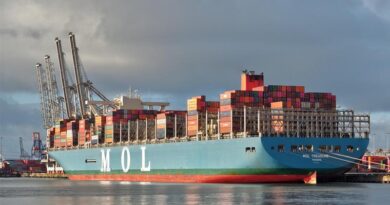
The main alternative route is also under strain. Houthi forces announced on September 14 that they had captured the Greater and Lesser Hanish Islands in the southern Red Sea, tightening their grip around the Bab al-Mandeb Strait. That matters because some Middle Eastern producers have been redirecting cargoes via the Red Sea and Suez Canal or pipelines, which already raises freight costs and transit times.
The impact now reaches phosphate production across several continents. In the United States, sulphur delivered to Tampa has cost more than $1,100 a tonne since May, against a ten-year average of roughly $172 per long ton. Mosaic has cut operating rates at its Florida and Louisiana plants by about half. China has been hit hardest on the import side, with elemental sulphur imports down 58% in the first half, which in turn reduced its phosphate fertilizer output and exports. Producers in Egypt, Brazil and India are also reported to be cutting output because of high feedstock costs.
The link to farm costs is direct, since about 4 tonnes of sulphur go into every 10 tonnes of DAP or MAP. Phosphate fertilizer prices rose about 30% after the war began and have stayed at those levels since mid-May, even as urea and ammonia have fallen back toward pre-war prices.
Governments step in as costs mount
Several governments are now absorbing part of the shock. The European Commission set up a temporary state aid framework allowing member states to cover up to 70% of farmers’ extra fuel and fertilizer costs, Brazil’s fertilizer industry has asked for emergency subsidies for sulphur purchases, and India’s fertilizer subsidy bill may exceed 3 trillion rupees against 1.71 trillion budgeted. In the United States, eight Florida lawmakers have asked the administration to take action on raw material supply.
The near-term outlook is mixed. SMM’s analysts expect Chinese sulphuric acid prices to stay low and drift slightly lower, and the market is watching supply cuts during October plant maintenance and how hard phosphate plants run through the autumn and winter stocking season. Middle East producers typically announce October contract prices around month-end, which will be the next firm signal. Softer Chinese demand may take some heat out of spot offers, but as long as Gulf cargoes cannot move freely, prices have a high floor.
Global Agriculture is an independent international media platform covering agri-business, policy, technology, and sustainability. For editorial collaborations, thought leadership, and strategic communications, write to pr@global-agriculture.com